Response Filter Servlet Example


This Example shows how to use of response filter in Java Servlet. Filter reads own initial parameters and adds its value to the response. Use the init-param child element of the filter element to declare the initialization parameter and its value. Inside the filter, access the init parameter by calling the FilterConfig object's getInitParameter method.
Here is the source code of ResponseFilterExample.java
import java.io.*;
|
The above code initialized the FilterConfig object in its init methods, which is called once when the web container creates an instance of the filter. The code then gets the value of the filter's init parameter by calling: config.getInitParameter("response").
Mapping for the filter in web.xml:
| <filter> <filter-name>ResponseFilterExample</filter-name> <filter-class>ResponseFilterExample</filter-class> <init-param> <param-name>response</param-name> <param-value>Hello Response Filter Example!</param-value> </init-param> </filter> <filter-mapping> <filter-name>ResponseFilterExample</filter-name> <url-pattern>/JSP/response.jsp</url-pattern> </filter-mapping> |
The source code of response.jsp:
| <html> <head> <title>Response Filter Example</title> </head> <body> <h2><font color="green">Response Filter and Initialized Parameters</font></h2> <br> </body> </html> |
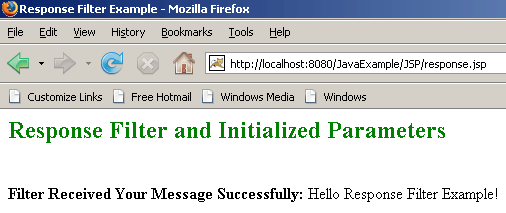
Running the program by this url: http://localhost:8080/JavaExample/JSP/response.jsp the message will display below